This We Know – Chief Si’ahl

This we know.

The earth does not belong to us: we belong to the earth.

This we know.

All things are connected, like the blood that unites one family.

Wate’er befalls the earth, befalls the children of earth.

This we know.

We did not weave the web of life, we are merely a strand in it.

Whatever we do to the earth, we do to ourselves.

This we know.

— Chief Si’ahl

Chief Si’ahl is also know as Chief Sealth or Seattle.

Safer Consumer Products – DTSC

Screen shot 2014-03-14 at 10.55.06 AM

SACRAMENTO –The Department of Toxic Substances Control (DTSC) is challenging manufacturers to make their products safer and dramatically changing the way consumers are protected from potential toxic harm. This initiative fosters safe environment and healthy economy.

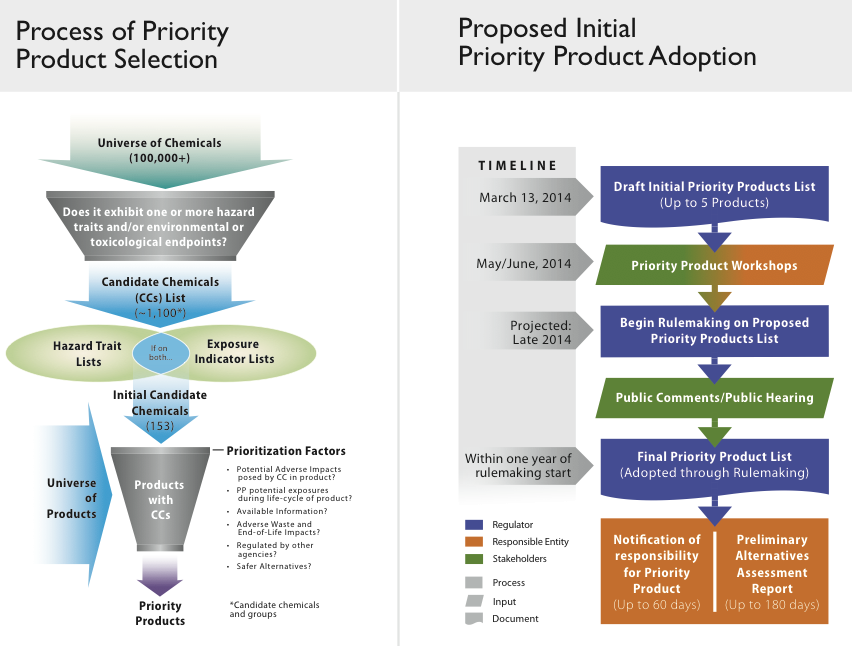
As a key step in its Safer Consumer Products regulations, DTSC is announced three draft “Priority Products” – consumer goods sold in California that each contain at least one toxic chemical. DTSC is asking manufacturers to figure out if there’s a safer alternative. Publication of this draft list of products imposes no new regulatory requirements on manufacturers until DTSC finalizes it by adopting regulations.

The first three Priority Products announced by DTSC are:

  • Children’s foam padded sleeping products containing TDCPP (chlorinated TRIS), a flame retardant and probable carcinogen that can also cause chronic health effects.
  • Spray Polyurethane Foam (SPF) systems containing unreacted di-isocyanates. SPF systems are used for home and building insulation, weatherization, sealing and roofing. Di-isocyanates can irritate the respiratory tract, cause asthma and cancer and are known skin irritants.
  • Paint stripper containing Methylene Chloride, a known carcinogen and neurotoxin.

DTSC is not banning these products. It is starting a process, requiring manufacturers who want to sell them in California to conduct an “Alternatives Analysis” to determine if feasible safer ingredients are available. The final list of Priority Products won’t be official until a rule-making process is complete, which could take up to a year. After that, manufacturers will begin the Alternative Analysis process.

“People want safer consumer products, and this innovative program establishes a process by which government and businesses can work together to meet this public demand.” said Matt Rodriquez, California Secretary for Environmental Protection. “Many companies already understand that looking for product alternatives to reduce consumer risk is a sound business practice. The eyes of the world will be watching us as we progress in this new, collective effort to protect public health and preserve our environment.”

DTSC’s landmark Safer Consumer Products regulations, which took effect Oct.1, 2013, represent a significant shift toward a more protective, economically viable approach to how California ensures the safety of consumer products. The regulations provide an opportunity for innovative industries to capitalize on the growing consumer demand for products that are safer and better for the environment.

Screen shot 2014-03-14 at 10.59.12 AM

DTSC selected these priority products because they contain at least one of more than 1,100 toxic chemicals that the Department identified as having the potential to cause significant harm to people or the environment. The products also are widely used and create the potential for significant public exposure to these chemicals.

“The impact of this initiative will be significant,” said DTSC Director Debbie Raphael. “Not only is DTSC asking that these three products be made safer, it is signaling to manufacturers to examine their products and find safer alternative ingredients whenever any of the more than 1,100 chemicals identified by this program are used.”

“This approach will also protect California workers, who can be exposed to high levels of hazardous chemicals in paint stripping and insulating products, especially when the products are used in confined spaces,” said Christine Baker, Director of California’s Department of Industrial Relations, which oversees the state’s worker safety program, Cal/OSHA. “DTSC’s new regulations will motivate investment in safer alternatives; we see that as a smart strategy to prevent on-the-job injuries and illnesses.

Visit the Safer Consumer Product website for more information:

https://dtsc.ca.gov/SCP/index.cfm

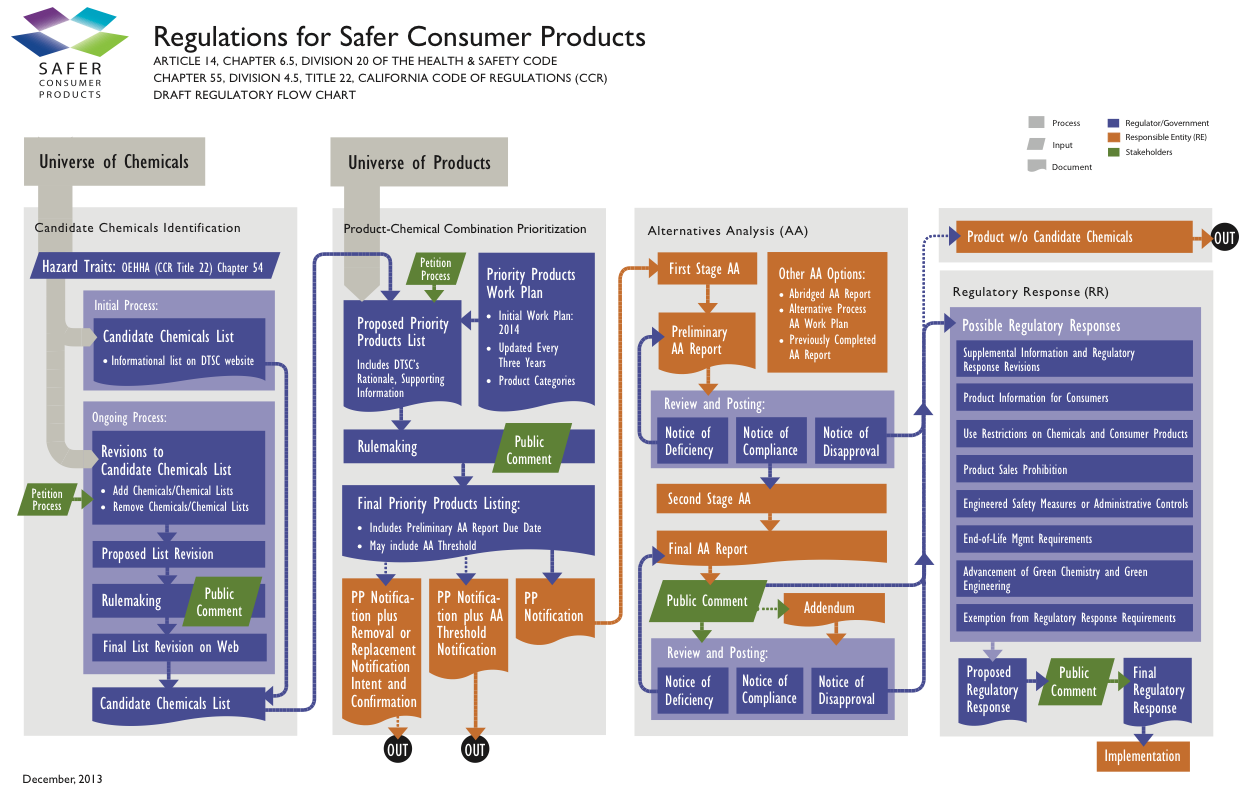
Safer Consumer Products Process

Safer Consumer Products Process


Earth Day – US Census Facts

Profile America Facts for Features — Earth Day: April 22, 2014

Census Bulletin CB14-FF.06; March 12, 2014


Earth Day: April 22, 2014

April 22, 2014, marks the 44th anniversary of Earth Day ― a day intended to inspire awareness and appreciation for the Earth’s natural environment. The day came from reaction to a massive oil spill in waters near Santa Barbara, Calif., in 1969. In honor of Earth Day ― and Earth Week (April 16-22) ― this edition of Profile America Facts for Features includes examples of Census Bureau statistics pertaining to energy and the environment.

Heating and Cooling the Home

2.4 million: Estimated number of occupied housing units across the country heated by wood in 2012, which is 2.1 percent of all homes.

42,747: Estimated number of occupied housing units across the country totally heated by solar energy in 2012.

57.0 million: Estimated number of occupied housing units across the country heated by utility gas in 2012, which is 49.4 percent of all homes. (Source: 2008-2012 American Community Survey five-year estimates, Table B25040.)

89%: Estimated percent of newly built single-family homes across the country with air-conditioning in 2012. In 1973, it was 49 percent. (Source: 2012 Characteristics of New Housing)

Commuting to Work

25.7 minutes: Estimated average time for workers age 16 and older across the country spent getting to work in 2012, up from 25.5 minutes in 2011 and 25.3 minutes in 2010.

31.9 and 31.8 minutes: Estimated average time for workers age 16 and older in Maryland and New York spent getting to work in 2012, the longest commute time in the nation. (The two times are not statistically different.) Maryland’s time is down from 32.2 minutes in 2011.

16.7 and 17.4 minutes: Estimated average time workers age 16 and older in South Dakota and North Dakota spent getting to work in 2012, the shortest one-way commute times in the nation. (The two times are not statistically different.)

864,883: Estimated number of people who rode a bicycle to work in 2012. This comes out to about 0.6 percent of the American workforce.

3,969,058: Estimated number of people who walked to work in 2012. This comes out to about 2.8 percent of the American workforce.

Using Energy

18,817 trillion BTUs: The energy consumption in the U.S. manufacturing sector in 2010, down 17 percent from the 22,576 trillion Btu (British thermal units) consumed in 2002.

-32%: The drop in the consumption of coal in the U.S. manufacturing sector from 2002 to 2010, going from 1,956 trillion Btu in 2002 down to 1,328 trillion Btu consumed in 2010.

Source: U.S. Energy Information Administration, 2010 Manufacturing Energy Consumption Survey

Building a House

2,505 square feet: The average size of a single-family home completed in 2012; 63,000 had two or fewer bedrooms and 198,000 had four bedrooms or more.

1,660 square feet: The average size of a single-family home completed in 1973

$292,200: The average sales price of a new single-family home sold in 2012. In 2011, the average sales price of a single-family home sold was $267,900.

Source: 2012 Characteristics of New Housing

Reduce, Reuse, Recycle

$7.6 billion: Product shipments value of recycled paperboard in 2011. This is up from $7.2 billion in 2010.

Source: 2010 and 2011 Annual Survey of Manufactures

Collecting Revenue

$1.2 billion: Estimated revenue for “waste collection – hazardous waste management collection services” in 2012 for estimated sources of revenue for U.S. employer firms. This was down 13.1 percent from 2011.

$5.7 billion: Estimated revenue for “waste treatment and disposal – hazardous waste treatment and disposal services” in 2012 for estimated sources of revenue for U.S. employer firms. This was down 5.1 percent from 2011.

Livable Wages for Chico

The California Budget Project’s (CPB, http://www.cpb.org) December, 2013 report, “Making Ends Meet: How Much Does It Cost to Support a Family in California?” analyzed the cost to live in California and each of its counties.  The CBP analyzed the following basic living needs: housing and utilities, child care, transportation, food, health care, miscellaneous expenses (including telephone service, housekeeping supplies, and other basic costs), and taxes.

Livable Wage in Chico/Butte County

  • A single adult needs an annual income of $26,615, or $12.80/hour.
  • A single-parent family with two children needs an annual income of $61,605, or $29.62/hour.
  • A two-parent family with one parent working and two children needs an annual income of $53,138, or $25.57/hour.
  • A family with two working parents and two children needs an annual income of $69,480, or $16.70/hour for each working parent.

How much do people in Chico make? According the latest Census information, American Community Survey (ACS) reports that in Chico:

  • The median household income is $42,896/year, or $20.62/hour.
  • The median family income is $56,301/year, or $27.07/hour.
  • The per capita income is $23,573, or $11.33/hour.

The US Census reports that 23% of the population in Chico is below poverty level.

California Budget Project – Dec. 2013 Annual Costs Butte Co.
Single Adult Single-Parent Family Two-Parent Family (One working) Two-Working Parent Family
Housing/Utilities $532 $878 $878 $878
Child Care $0 $892 $0 $892
Transportation $309 $309 $309 $538
Food $293 $627 $866 $866
Health Care $484 $1,350 $1,411 $1,411
Miscellaneous $212 $439 $509 $509
Taxes $388 $639 $460 $697
MONTHLY TOTAL $2,218 $5,134 $4,432 $5,790
ANNUAL TOTAL $26,615 $61,605 $53,183 $69,480
HOURLY WAGE $12.80 $29.62 $25.57 $33.40

Livable Wage for the State of California (statewide average)

  • A single adult needs an annual income of $32,625, or $15.69/hour.
  • A single-parent family with two children needs an annual income of $74,477, or $35.81/hour.
  • A two-parent family with one parent working and two children needs an annual income of $60,771, or $29.22/hour.
  • A family with two working parents and two children needs an annual income of $81,553, $19.61/hour per each working parent.

HUD Low-Income Status – Butte County

HUD Income Limits – Butte Co, 2014
Persons in Family Extremely Low Income (30%) $/Hour Very Low Income (50%) $/Hour Low Income (80%) $/Hour
1 $11,500 $5.53 $19,150 $9.21 $30,650 $14.74
2 $13,150 $6.32 $21,900 $10.53 $35,000 $16.83
3 $14,800 $7.12 $24,650 $11.85 $39,400 $18.94
4 $16,400 $7.88 $27,350 $13.15 $43,750 $21.03
5 $17,750 $8.53 $29,550 $14.21 $47,250 $22.72
6 $19,050 $9.16 $31,750 $15.26 $50,750 $24.40
7 $20,350 $9.78 $33,950 $16.32 $54,250 $26.08
8 $21,650 $10.41 $36,150 $17.38 $57,750 $27.76
Median Income $54,000

Chico Jobs that Pay Less Than a Livable Wage

The following list of wages in Chico comes from the Employment Development Department’s California Labor Market data for Chico (http://www.labormarketinfo.edd.ca.gov). Seven of the top-ten, high hourly wage jobs are medical (dentists, doctors, pharmacists, physician assistants, etc.) while police supervisors (ranked #6) make more than PAs, chief executives, and architects/engineers.

At the other end of the scale the ten, lowest wage jobs in Chico include primarily restaurant workers (6 out of the bottom 10), home health aides, community and social service specialists, tree trimmers, and amusement and recreation attendees. Waiters and waitresses were the lowest, hourly wage workers in Chico.

  • Livable Wage for a Single Person in Chico = $12.80/hr., 21% of all occupations in Chico pay less than the Livable Wage for a single person.
  • Livable Wage for a One-Worker Family in Chico is $29.62/hr., 77% of all occupations in Chico have a median wage that is less than the Livable Wage for Chico.
High Wage Occupations in Chico MSA, California Labor Market Info 2013 Median Hourly Wage 2013 Average Hourly Wage
Dentists, General $0.00 $115.23
Pediatricians, General $0.00 $113.76
Physicians and Surgeons, All Other $0.00 $106.91
Internists, General $0.00 $102.85
Pharmacists $69.14 $69.50
Family and General Practitioners $61.65 $70.81
Police and Detective Supervisors $59.97 $57.27
Physician Assistants $52.79 $51.29
Chief Executives $51.47 $65.99
Architectural and Engineering Managers $50.61 $69.79
Nurse Practitioners $50.04 $50.73
Lawyers $48.73 $45.22
Sales Managers $48.05 $52.41
Purchasing Managers $47.29 $44.50
Computer and Information Systems Managers $46.01 $47.41
Occupational Therapists $44.40 $45.20
Registered Nurses $44.28 $44.28
Medical and Health Services Managers $44.24 $45.98
Human Resources Managers $44.09 $51.57
Speech-Language Pathologists $43.90 $45.27
Dental Hygienists $43.73 $45.43
Optometrists $43.71 $43.95
Construction Managers $43.38 $42.81
Engineers, All Other $43.22 $43.15
Physical Therapists $42.82 $44.59
Medical and Clinical Laboratory Technologists $41.98 $41.28
Industrial Engineers $40.90 $39.76
Tax Examiners and Collectors, and Revenue Agents $40.10 $38.77
Marketing Managers $39.76 $41.92
Sales Representatives, Technical and Scientific $39.61 $47.08
Industrial Production Managers $39.53 $38.25
Electrical and Electronic Engineering Technicians $39.00 $35.16
Financial Managers $38.99 $44.66
Electronics Engineers $38.83 $38.35
Surveyors $38.76 $35.49
Power Plant Operators $38.35 $38.89
Management Occupations $38.12 $45.16
Information Security Analysts $38.12 $37.24
Veterinarians $37.98 $40.30
General and Operations Managers $37.05 $47.04
Healthcare Practitioners and Technical Occupations $37.05 $39.42
Diagnostic Medical Sonographers $36.61 $38.42
Urban and Regional Planners $36.37 $37.85
Civil Engineers $36.36 $36.05
Software Developers, Applications $36.33 $39.42
Hydrologists $36.19 $40.34
Vocational Education Teachers, Postsecondary $35.83 $32.62
Transportation, Storage, and Distribution Managers $34.98 $35.74
Financial Analysts $34.93 $38.66
Social and Community Service Managers $34.72 $32.67
Detectives and Criminal Investigators $34.60 $33.13
Budget Analysts $34.37 $34.66
Soil and Plant Scientists $33.90 $36.42
Construction Trades and Extraction Supervisors $33.82 $34.08
Respiratory Therapists $33.64 $33.51
Police and Sheriff Patrol Officers $33.60 $35.07
Education Administrators, All Other $33.17 $40.47
Network and Computer Systems Administrators $32.94 $35.61
Administrative Services Managers $32.69 $37.99
Clinical, Counseling, and School Psychologists $32.36 $31.51
Water and Liquid Waste Treatment Plant Workers $32.21 $31.66
Meter Readers, Utilities $31.89 $29.93
Computer Systems Analysts $31.64 $33.02
Claims Adjusters, Examiners, and Investigators $31.60 $30.45
Database Administrators $31.20 $29.78
Architecture and Engineering Occupations $31.05 $32.39
Social Scientists and Related Workers, All Other $30.77 $32.00
Postmasters and Mail Superintendents $30.63 $33.12
Computer Network Architects* $30.61 $34.94
Personal Financial Advisors $30.58 $42.91
Computer and Mathematical Occupations $30.02 $31.67
Construction and Building Inspectors $30.00 $30.41
Radiologic Technologists $29.96 $30.08
Accountants and Auditors $29.75 $31.46
Industrial Machinery Mechanics $29.62 $33.15
Occupations Paying less than Livable Wages in Butte County for One-Worker Families 2013 Median Hourly Wage 2013 Average Hourly Wage
Labor Relations Specialists $29.28 $29.16
Compensation, Benefits, and Job Analysis Specialists $29.09 $32.69
Mechanics, Installers, and Repair Supervisors $28.95 $31.84
Management Analysts $28.89 $30.27
Physical Therapist Assistants $28.86 $30.17
Librarians $28.83 $28.96
Mechanical Engineers $28.35 $31.87
Business Operations Specialists, All Other $28.19 $34.06
Environmental Scientists, Including Health $27.98 $26.68
Instructional Coordinators $27.79 $29.32
Surgical Technologists $27.66 $28.38
Legal Occupations $27.35 $35.64
Civil Engineering Technicians $27.35 $27.32
Postal Service Mail Carriers $27.09 $25.18
Environmental Technicians, Including Health $27.03 $27.27
Business and Financial Operations Occupations $26.92 $29.72
Occupational Therapy Assistants $26.82 $24.64
Transportation and Material-Moving Supervisors $26.72 $26.70
Educational, Guidance, School, and Vocational Counselors $26.60 $29.61
Fire Fighting and Prevention Workers Supervisors $26.49 $28.19
Environmental Engineers $26.48 $30.22
Social Workers, All Other $26.41 $24.92
Farming, Fishing, and Forestry Supervisors $26.37 $29.98
Market Research Analysts and Marketing Specialists* $26.27 $29.56
Education, Training, and Library Occupations $26.11 $28.86
Postal Service Clerks $25.87 $23.80
Postal Service Mail Processors $25.87 $21.31
Industrial Engineering Technicians $25.86 $26.80
Healthcare Social Workers $25.85 $26.17
Computer User Support Specialists $25.82 $25.19
Financial Services Sales Agents $25.74 $30.66
Computer Programmers $25.71 $27.61
Dietitians and Nutritionists $25.47 $25.27
Heating/Air Conditioning and Refrigeration Workers $25.08 $24.46
Loan Officers $25.02 $26.80
Cost Estimators $24.70 $29.03
Real Estate Appraisers and Assessors $24.66 $25.41
Excavating and Loading Machine Operators $24.64 $27.25
Public Safety Dispatchers $24.55 $23.71
Landscaping and Groundskeeping Supervisors $24.50 $24.09
Mental Health Counselors $24.39 $23.70
Mobile Heavy Equipment Mechanics, Except Engines $24.29 $24.11
Licensed Vocational Nurses $24.20 $24.40
Non-Retail Sales Supervisors $23.88 $25.28
Human Resources Specialists* $23.82 $24.93
Electricians $23.81 $24.25
Mental Health and Substance Abuse Social Workers $23.80 $20.82
Machinists $23.77 $22.65
Child, Family, and School Social Workers $23.72 $22.54
Drywall and Ceiling Tile Installers $23.21 $22.99
Compliance Officers $23.18 $25.09
Protective Service Occupations $23.07 $24.07
Fire Inspectors and Investigators $23.07 $23.38
Purchasing Agents $23.01 $24.37
Public Relations Specialists $22.95 $25.34
Life, Physical, and Social Science Occupations $22.89 $26.01
Production and Operating Supervisors $22.83 $24.60
Office and Administrative Support Supervisors $22.80 $23.98
Food Service Managers $22.54 $23.53
Architectural and Civil Drafters $22.54 $23.09
Chefs and Head Cooks $22.52 $24.07
Mechanical Drafters $22.30 $22.97
Cardiovascular Technologists and Technicians $22.27 $25.44
Sales Representatives, Except Technical $22.09 $29.49
Separating and Filtering Machine Workers $22.09 $23.51
Roofers $22.07 $21.28
Real Estate Sales Agents $22.05 $22.62
Plumbers, Pipefitters, and Steamfitters $21.97 $21.80
Procurement Clerks $21.71 $21.23
Automotive Body and Related Repairers $21.58 $21.84
Painters, Transportation Equipment $21.57 $26.16
Operating Engineers $21.49 $23.42
Highway Maintenance Workers $21.36 $21.41
Computer Network Support Specialists $21.24 $20.92
Construction and Extraction Occupations $21.22 $23.14
Education Administrators, Preschool and Child Care Center/Program $21.20 $21.75
Electrical and Electronics Repairers, Commercial $21.18 $23.34
Training and Development Specialists $21.09 $22.48
Cement Masons and Concrete Finishers $20.99 $24.37
Wholesale and Retail Buyers, Except Farm Products $20.77 $23.77
Advertising Sales Agents $20.66 $25.28
Lodging Managers $20.61 $22.09
Legal Support Workers, All Other $20.47 $23.73
Editors $20.36 $22.88
Helpers, Laborers, and Material-Moving Supervisors $20.33 $21.17
Eligibility Interviewers, Government Programs $20.31 $19.86
Fitness Trainers and Aerobics Instructors $20.26 $19.64
Executive Secretaries $20.02 $20.63
Heavy Truck Drivers $20.00 $21.15
Property and Community Association Managers $19.93 $20.71
Fire Fighters $19.84 $21.36
Sales Representatives, Services, All Other $19.70 $22.51
Automotive Service Technicians and Mechanics $19.63 $20.41
Paralegals and Legal Assistants* $19.52 $21.69
Production, Planning, and Expediting Clerks $19.36 $20.82
Payroll and Timekeeping Clerks $19.35 $20.04
Education/Training/Library Workers, All Other $19.33 $21.82
Food Cooking Machine Operators and Tenders $19.20 $17.68
Security and Fire Alarm Systems Installers $18.95 $18.36
Pharmacy Technicians $18.78 $19.76
Self-Enrichment Education Teachers $18.74 $20.91
Health Technologists and Technicians, All Other $18.58 $18.92
Construction Laborers $18.57 $22.42
Court, Municipal, and License Clerks $18.57 $19.39
Counselors, All Other $18.56 $22.21
Financial Specialists, All Other $18.55 $20.89
Writers and Authors $18.36 $18.72
Web Developers $18.31 $22.14
Marriage and Family Therapists $18.26 $20.50
Installation, Maintenance, and Repair Occupations $18.20 $20.40
Medical Transcriptionists $18.17 $19.54
Community and Social Services Occupations $18.16 $19.77
Carpenters $18.00 $25.37
Bus and Truck Mechanics $17.98 $19.28
Butchers and Meat Cutters $17.94 $17.33
Loan Interviewers and Clerks $17.92 $17.82
Inspectors, Testers, Sorters, and Weighers $17.81 $19.49
Interpreters and Translators $17.79 $20.31
Housekeeping and Janitorial Supervisors $17.70 $19.52
Farm Equipment Mechanics $17.60 $18.58
Graphic Designers $17.53 $18.67
Retail Sales Supervisors $17.49 $18.84
Maintenance Workers, Machinery $17.39 $18.30
Library Technicians $17.39 $18.20
Opticians, Dispensing $17.18 $17.99
Ophthalmic Laboratory Technicians $17.17 $17.20
Producers and Directors $17.16 $19.19
Dental Assistants $17.11 $16.80
Phlebotomists $17.09 $17.24
Pipelayers $17.03 $18.06
Bill and Account Collectors $16.92 $16.82
Meeting, Convention, and Event Planners* $16.89 $16.72
Prepress Technicians and Workers $16.81 $16.66
Helpers, Electricians $16.76 $17.44
Computer-Controlled Machine Tool Operators $16.74 $16.79
Word Processors and Typists $16.72 $17.02
Library Assistants, Clerical $16.71 $17.35
Bookkeeping, Accounting, and Auditing Clerks $16.70 $17.31
Interviewers, Except Eligibility and Loan $16.64 $17.07
Printing Press Operators $16.63 $15.99
Veterinary Technologists and Technicians $16.62 $15.99
Substance Abuse and Behavioral Disorder Counselors $16.59 $17.84
Human Resources Assistants $16.46 $17.25
Refuse and Recyclable Material Collectors $16.36 $15.16
Painters, Construction and Maintenance $16.34 $18.39
Information and Record Clerks, All Other $16.32 $16.73
Healthcare Support Workers, All Other $16.20 $17.09
Bus Drivers, School or Special Client $16.19 $16.18
Health Information Technicians $16.18 $17.11
Arts, Design, Entertainment, Sports, and Media $16.15 $19.00
Medical Equipment Preparers $15.86 $15.92
Dispatchers, Except Police, Fire, and Ambulance $15.85 $16.18
Personal Service Worker Supervisors $15.82 $16.50
Industrial Truck and Tractor Operators $15.78 $16.52
Medical Secretaries $15.71 $15.52
Installation, Maintenance, and Repair Workers, All Other $15.70 $18.23
Insurance Claims and Policy Processing Clerks $15.67 $16.20
Billing and Posting Clerks $15.67 $15.89
Painting, Coating, and Decorating Workers $15.49 $15.90
Structural Metal Fabricators and Fitters $15.43 $15.79
Emergency Medical Technicians and Paramedics $15.28 $15.85
Total, All Occupations $15.26 $20.43
Life and Social Science Technicians, All Other $15.26 $16.69
Production Occupations $15.05 $17.31
Maintenance and Repair Workers, General $15.03 $16.48
Coating, Painting, and Spraying Machine Workers $15.03 $16.27
Electronic Home Entertainment Equipment Workers $14.97 $15.15
Shipping, Receiving, and Traffic Clerks $14.86 $16.03
Pest Control Workers $14.86 $15.47
Welders, Cutters, Solderers, and Brazers $14.81 $15.96
Medical and Clinical Laboratory Technicians $14.73 $19.02
Animal Control Workers $14.70 $16.22
Cutting, Punching, and Press Machine Workers $14.68 $15.98
Secretaries, Except Legal, Medical, and Executive $14.64 $15.29
Office and Administrative Support Occupations $14.54 $15.55
Protective Service Workers, All Other $14.53 $16.38
Weighers, Measurers, Checkers, and Samplers $14.44 $14.89
Legal Secretaries $14.34 $14.81
Motorcycle Mechanics $14.26 $16.27
Agricultural and Food Science Technicians $14.19 $15.61
Cabinetmakers and Bench Carpenters $14.00 $14.72
Pharmacy Aides $13.92 $15.50
Light Truck Drivers $13.75 $17.78
Transportation and Material-Moving Occupations $13.65 $15.59
Office Machine Operators, Except Computer $13.65 $15.00
Forest and Conservation Technicians $13.64 $16.17
Sheet Metal Workers $13.63 $14.91
Tax Preparers $13.62 $14.46
Packaging and Filling Machine Workers $13.61 $13.77
Merchandise Displayers and Window Trimmers $13.55 $13.62
Computer and Office Machine Repairers $13.46 $13.71
Order Clerks $13.46 $13.38
Outdoor Power Equipment Mechanics $13.45 $16.16
Medical Equipment Repairers $13.29 $14.08
Medical Assistants $13.29 $13.60
Reporters and Correspondents $13.15 $14.56
Cooks, Institution and Cafeteria $13.13 $13.92
Assemblers and Fabricators, All Other $12.97 $13.12
Veterinary Assistants/Laboratory Animal Caretakers $12.90 $13.13
Occupations Paying less than Livable Wages in Butte County for a Single Person 2013 Median Hourly Wage 2013 Average Hourly Wage
Tellers $12.76 $12.62
Mail Workers, Except Postal Service $12.61 $12.54
Parts Salespersons $12.47 $13.46
Food Preparation and Serving Workers Supervisors $12.44 $13.43
Laborers and Material Movers $12.38 $12.50
Preschool Teachers, Except Special Education $12.26 $14.05
Receptionists and Information Clerks $12.03 $13.09
Helpers, Construction Trades, All Other $11.99 $12.80
Nursing Assistants $11.99 $12.79
Healthcare Support Occupations $11.97 $13.05
File Clerks $11.95 $14.10
Service Station Attendants $11.87 $11.67
Grinding, Polishing, and Buffing Machine Workers $11.85 $12.80
Counter and Rental Clerks $11.70 $13.52
Janitors and Cleaners, Except Maids/Housekeeping $11.60 $12.71
Bakers $11.57 $12.44
Recreation Workers $11.55 $13.15
Stock Clerks and Order Fillers $11.48 $12.74
Dietetic Technicians $11.40 $12.14
Building, Grounds, and Maintenance Occupations $11.34 $12.88
Woodworking Machine Workers, Except Sawing $11.31 $12.70
Team Assemblers $11.29 $12.45
Sales and Related Occupations $11.25 $15.33
Crushing, Grinding, and Polishing Machine Workers $11.18 $12.12
Office Clerks, General $11.13 $12.25
Sales and Related Workers, All Other $11.07 $12.98
Switchboard Operators $11.07 $11.47
Demonstrators and Product Promoters $10.96 $11.08
Residential Advisors $10.95 $12.16
Landscaping and Groundskeeping Workers $10.89 $12.37
Driver/Sales Workers $10.76 $13.83
Maids and Housekeeping Cleaners $10.68 $11.42
Social and Human Service Assistants $10.58 $12.46
Helpers, Installation and Repair Workers $10.57 $11.10
Helpers, Roofers $10.55 $10.93
Physical Therapist Aides $10.52 $11.90
Taxi Drivers and Chauffeurs $10.48 $10.43
Cooks, Restaurant $10.45 $10.79
Laundry and Dry-Cleaning Workers $10.44 $10.52
Security Guards $10.40 $11.68
Cooks, All Other $10.33 $10.50
Cleaners of Vehicles and Equipment $10.32 $11.40
Childcare Workers $10.23 $10.77
Data Entry Keyers $10.21 $12.04
Transportation Workers, All Other $10.16 $11.75
Hotel, Motel, and Resort Desk Clerks $10.13 $10.71
Nonfarm Animal Caretakers $10.12 $11.31
Food Preparation Workers $10.10 $11.00
Farming, Fishing, and Forestry Occupations $9.88 $11.74
Office and Administrative Support Workers, All Other $9.75 $10.98
Packers and Packagers $9.69 $10.07
Retail Salespersons $9.64 $11.61
Food Servers, Nonrestaurant $9.64 $9.66
Personal Care and Service Occupations $9.56 $11.70
Cashiers $9.54 $10.99
Cutting and Slicing Machine Workers $9.48 $11.98
Motor Vehicle Operators, All Other $9.47 $10.72
Farmworkers and Laborers, Crop and Nursery $9.40 $9.87
Tire Repairers and Changers $9.37 $10.42
Broadcast Technicians $9.30 $10.99
Sewing Machine Operators $9.24 $9.97
Cooks, Short Order $9.22 $9.81
Personal Care Aides $9.21 $9.43
Bartenders $9.21 $9.33
Food Preparation and Serving Related Occupations $9.19 $9.89
Counter Attendants, Concession, and Coffee Shop $9.16 $9.56
Helpers, Production Workers $9.14 $9.93
Home Health Aides $9.14 $9.31
Community and Social Service Specialists, All Other $9.10 $12.60
Combined Food Preparation and Serving Workers $9.09 $9.50
Tree Trimmers and Pruners $9.06 $10.38
Cooks, Fast Food $9.06 $9.07
Amusement and Recreation Attendants $9.05 $9.35
Dining Room, Cafeteria, and Bartender Helpers $9.02 $9.37
Dishwashers $8.95 $8.91
Hosts, Hostesses, Restaurant, and Coffee Shop $8.93 $8.75
Waiters and Waitresses $8.88 $8.78

Source: California Labor Market Information

ZERO WASTE

What is Zero Waste?

According to the U.S. Zero Waste Business Council (USZWBC, http://www.uszwbc.org ) zero waste is:

a goal that is ethical, economical, efficient and visionary, to guide people in changing their lifestyles and practices to emulate sustainable natural cycles, where all discarded materials are designed to become resources for others to use. Zero Waste means designing and managing products and processes to systematically avoid and eliminate the volume and toxicity of waste and materials, conserve and recover all resources, and not burn or bury them. Implementing Zero Waste will eliminate all discharges to land, water or air that are a threat to planetary, human, animal or plant health.”

The U.S. Zero Waste Business Council utilizes these guiding principles to help businesses and communities achieve over 90% diversion of waste from landfills, incinerators and the environment. They will be holding their “How to Become a Certified Zero Waste Business” training at Sierra Nevada Brewing Company on March 17, 2014 in conjunction with Sierra College’s Center for Applied Competitive Technologies (CACT).

Sierra Nevada Brewing Company has been Chico’s premiere sustainable business and the first firm in the nation to achieve Platinum Zero Waste Certification from USZWBC.

Learn How to Become a Certified Zero Waste Business on March 17

U.S. Zero Waste Business Council is offering a course, to prepare participants for certifications and to institute sustainable business polices that reduce waste and save money, in partnership with Sierra College CACT and host Sierra Nevada Brewing Co. in Chico, CA on March 17.

ROCKLIN – Learn how to achieve Zero Waste Business certification at a March 17 training offered by the U.S. Zero Waste Business Council (USZWBC) in partnership with Sierra College Center for Applied Competitive Technologies (CACT) http://sierracollegetraining.com/. Sierra Nevada Brewing Co. will host the training in Chico, CA and offer a tour demonstrating how the company diverted 99.8 percent of its waste. Register at http://www.uszwbc.org/; the early bird fee is $199 by February 15.

Manufacturers can particularly benefit from this training according to Carol Pepper-Kittredge, CACT Director, Sierra College. “By incorporating sustainability practices, businesses can cut costs, generate revenue and enhance their reputation,” said Pepper-Kittredge. “Working toward Zero Waste naturally complements’ companies’ efforts to reduce energy consumption, make their processes more efficient and become more globally competitive.”

Sierra Nevada Brewing Co. has been committed to a sustainable business model for many years explained Cheri Chastain, Sustainability Coordinator. “Sierra Nevada Brewing Co. was the first firm in the nation to achieve Platinum Zero Waste Certification from USZWBC,” said Chastain. “We are looking forward to hosting this event and sharing with other business leaders how our plant avoided $5,398,470 in disposal costs and generated $903,308 in revenue.”

Sue Beets-Atkinson, USZWBC president, indicated that the six-hour course plus tour of Sierra Nevada Brewing Co. Zero Waste Program will provide attendees with an overview of the USZWBC Zero Waste Business Scorecard certification system. “The course will outline the definition of Zero Waste and give corporate examples of Zero Waste policies and programs,” said Beets-Atkinson.

“Participants will benefit from a detailed explanation of the certification Scorecard, including case studies that demonstrate how to achieve credits. Attendees will also receive the new USZWBC Zero Waste Business Handbook, developed in collaboration with Sierra College CACT.”

For registration and to view details about the training program and individual and business certifications, please visit the U.S. Zero Waste Business Council website: http://www.uszwbc.org/.

Contacts:

Sue Michaels/Diane Wright
Sierra College Marketing/Public Relations
916-660-7272, 916-630-4535(fax)
smichaels@sierracollege.edu or dwright@sierracollege.edu

Gary Liss, Vice-President
U.S. Zero Waste Business Council
916-652-7850
ga…@garyliss.com


Rainwater Harvesting

It is raining, finally! 2013 was one of the driest years on record and 2014 has started off to be drier. Drought and water conservation is on everyone’s mind and the topic of conversation where ever you go in Chico and the Northstate. Walking through my neighborhood in the rain this morning I couldn’t help but notice all the rainwater pouring out of downspouts, down driveways and walkways, and into the gutter. My feet get soaked wading through the streams of runoff crossing sidewalks. In a week or two, after the rain stops again, many will wish that the rain that went down the drain could have been used to water their landscape and gardens, if they had only harvested the runoff.

Harvesting rainwater is nothing new, it has been happening since people figured out how to build catchments, of course that lead to dam building. The drawing below is from a 1909 publication on how to be self-sufficient. It is a rain barrel designed to provide potable water, which is not allowed with today’s catchment systems unless they get a health department certification and contain elaborate water purification systems installed, not just sand, gravel, and charcoal.

Screen shot 2014-03-04 at 1.59.14 PMSource: “Household Discoveries and Mrs. Curtis’s Cookbook” 1909

Many homes in the Midwest have cisterns that collect rainwater or have used rain barrels for years. California’s latest drought has brought a resurgence in rainwater harvesting. However, installing rain barrels or cisterns in the middle of a drought doesn’t help much.  A couple communities in California are offering rebates (one offers $100 rebate and another $1 per gallon up to $400 per household) to install rain barrels on your downspouts.

Fortunately the California Rainwater Capture Act of 2012 (AB 1750) was signed into law two years ago and it allows rainwater to be collected and used without requiring a “water right permit” (whatever that is; however, local building code requirements may apply if a city creates them like Berkeley and San Diego) and allows landscaping contractors to install rainwater harvesting systems.

Why Harvest Rainwater?

First, it is free water and is relatively pollutant free and contains no minerals (soft water). You don’t want to use the rainwater collected after the first rainfall of the season in the fall. As “stuff” that has settled on your roof will be washed off into the water. We do live in an agricultural area and the fall harvest dumps tons of dust, herbicides, and pesticides into the air that ends up on our roofs.

Second, rainwater running off your property and into the storm drain doesn’t end up where it belongs, in the aquifer. Normally it would have soaked into the soil and what isn’t transpired ended up in the surface aquifer. Keeping it on-site and letting it soak into the ground is a good thing for the aquifer that supports our urban forest.

Third, it can displace water from your local water supplier if you use it to water your garden or yard and not only save water but money too.

How Much Rainwater is Available?

Here in Chico there is too much rainwater when you don’t need and not enough rain when you do (a good reason for storing it). The historic average rainfall in Chico is 26 inches a year. However, it falls mainly from November through March (see chart below), which is typical in Mediterranean climates, when it isn’t needed for landscaping as most yard plants and lawns are dormant in the winter. However, from April through October, when it is needed, we are in drought conditions with little or no rain and high evapotranspiration requirements due to our high temperatures and low humidity levels. Capturing the rainfall from an entire rainy season isn’t practical in most urban settings.  It only practical if you invest in a large cistern system.

Screen shot 2014-03-04 at 1.57.16 PM

One inch of rain falling on a 1,000 square foot surface will produce 623 gallons of water. Here in Chico with 26 inches of rain a year (when it rains) a 1,000 sq.ft. surface could collect about 16,200 gallons of water. According to the Department of Water Resources the average California household consumes almost 24,000 gallons or water per month, about half of which is used for interior uses (toilets, faucets, showers, clothes washing, etc.) and the other half for exterior uses (landscaping, pools, washing cars, etc.). The State will not let you use rainwater for potable uses; therefore, it will need to be used for your landscaping and gardening. The 16,200 gallons you collected would provide you with six weeks of landscape and garden watering. If you thought about using 55-gallon rain barrels to capture all of your roof runoff you would need 295 of them.

The chart below illustrates the number of rain barrels per month needed to store the water collected from a 1,000 sq.ft. roof.

Screen shot 2014-03-04 at 2.22.13 PM

Calculating Rain Water Runoff

The amount of rain that falls on a roof can be calculated by finding the area of your roof’s footprint and not the area of the roof. My house is roughly 24 feet by 50 feet and the roof overhangs 1.5 feet, so I would add 3 feet to each dimension to give me 27 feet by 53 feet, or 1,431 square feet of rainwater collector surface.

Screen shot 2014-03-04 at 1.58.30 PM

Source: The Texas Manual on Rainwater Harvesting, Texas Water Development Board

Rainwater Collection Formula

To determine the amount of rainwater you can capture a little math must be done. Since rain falls on surfaces we need to know the area of the surface the rain is falling on and the depth of the rain falling on that surface to get the volume of water. I have already determined that the amount of rainwater in a 1-inch rain that can be collected is equal to the area of the footprint of the roof times the 0.623 gallons per square foot.

Gallons of Rainwater = Roof Area (sq.ft.) x 0.623 gallons/sq.ft./inch or rain = # gallons/inch of rain

Using my house, the area of my roof footprint is 1,431 sq.ft., so the quantity of rainwater can be determined:

My house = 1,431 sq.ft. x 0.623 gallons/sq.ft. = 892 gallons/inch of rain

So every time we get a 1-inch rain, 892 gallons of rain falls on my roof. In a year over 22,300 gallons will fall on it.

Annual Rain Collection = 892 gallons/inch of rain x 26 inches of rain/year = 22,300 gallons/year

Of course not all of the rainfall will be harvested, some evaporates and some never makes it into the catchment system and you might only end up with 80 – 90 percent of the total amount. Since you probably aren’t going to collect it all anyway don’t worry about what you aren’t collecting in the first place.

One further refinement that may be important is estimating the rainfall production by roof slope or by downspout so that your catchment system can be adequately sized for the surface it collects. A simple roof rain-gutter system typically has one downspout per slope. The image below illustrates the capture areas of each downspout. You can calculate the amount of water available from each downspout the same way as shown above. Measure from the peak of the roof to the edge of the roof on each slope. If one downspout serves two slopes calculate the area served by the downspout.

Screen shot 2014-03-04 at 1.58.50 PMSource: City of San Diego Rainwater Harvesting Guide.

Once you’ve figured out the relative quantities of water that can be captured from each downspout the next step is to figure out how many rain barrels you want to place at each downspout. How much rainwater you collect, store, and use depends on how you are going to use it, how much you can afford, and the space available in your yard. Placing one or two rain barrels at each downspout will provide you with some extra non-chlorinated water to use in your garden or household plants and will make a small dent in your water bill.

Rainwater Harvest System

We will be addressing rain barrels; however, if you are serious about harvesting rainwater a cistern may be more in line with your needs. There are numerous rainwater harvesting websites that contain a lot of information for larger, permanent systems.

A rain barrel system is relatively simple to design and install. Nani Teves, the “Chico Queen of Rain Barrels”, holds periodic rain barrel workshops (check out the Butte Environmental Council’s website http://www.becnet.org/events/rainwater-catchment-workshop). It basically involves a barrel connected to the downspout in some way, with a screened opening to keep the stuff and mosquitos out, an overflow system, and a spigot to get the water out.

Screen shot 2014-03-04 at 1.59.02 PMSource: City of Berkeley, Rainwater Harvesting

Collect the water that runs off your roof and store it in barrels or cisterns. The City of Chico has no rainwater harvesting requirements for rain barrels (some cities have permit requirements for rain barrels and cisterns). The most basic systems place a barrel under a downspout and let the downspout run into the barrel at the top. The barrel has a hose bib at the bottom to allow you to use the water and drain the barrel.

Screen shot 2014-03-04 at 1.59.23 PMSource: City of San Diego Rainwater Harvesting Guide.

Barrels can be purchased from rainwater harvesting companies on-line of you can use retired olive barrels (a good source are the olive producers in Corning and Oroville). Recycled olive barrels are cheap and can be found for $10 – $30 per 55-gallon barrel. Hose bibs are around $5.

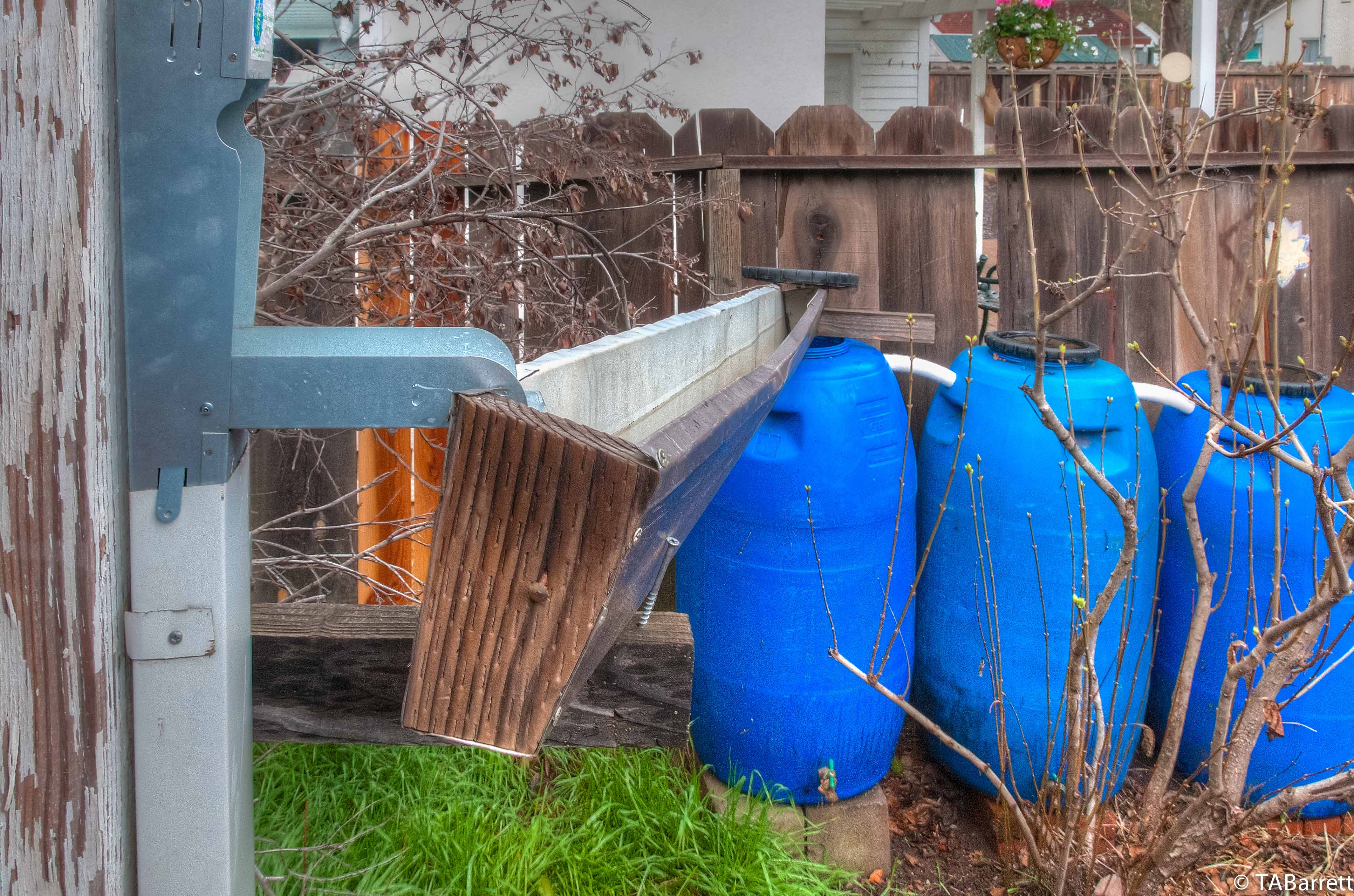
Rainwater catchment system with downspout diverter and barrels.

Rainwater catchment system with downspout diverter and barrels.

Rainwater catchment system.

Rainwater catchment system.

Conclusion: To Harvest Rainwater or Not

Harvesting rainwater in Chico will provide a little more than a drop in a bucket, but it will provide something. Someone once said, “It don’t matter what you do as long as you do something.” Collecting rainwater even in one barrel is something.

Don’t collect rainwater to save money, you probably won’t notice any savings. In Chico 100 cubic feet  (Ccf) of water (water is not sold by gallons but in hundred cubic feet quantities) cost $0.92. If you were able to reduce your water bill by all the rain running off of a 1,000 square foot roof in Chico, the 16,200 gallons (21.7 Ccf) you would collect will save you $20 a year.

The biggest problem with rainwater harvesting in Chico is that most of the rain occurs over a four or five month period in the winter when it isn’t really needed, and then is it doesn’t rain for four or five months straight during the summer when you need it the most. Rainwater collected in the winter would have to be stored until it was needed, in May through October. Four or five, 55-gallon rain barrels wouldn’t provide more than a few weeks of landscape watering or for your food garden.

References:

City of Berkeley, “Rainwater Harvesting Systems”

City of San Diego, “Rainwater Harvesting Guide”

Texas Water Board, “The Texas Manual on Rainwater Harvesting